Squad-led survivor combat
Inspired by Vampire Survivors and auto-chess, the game shifts the survivor formula from a lone fighter to commanding a growing squad of autonomous champions.
Game project · UW CSE senior capstone
An auto-chess-inspired survivor game about building a legion, discovering squad synergies, and keeping it alive under escalating pressure.
The premise
Unlike traditional survivor games, Legion’s Expedition doesn’t cast the player as a lone fighter. You take the role of a commander leading a squad of autonomous champions.
You focus on tactical movement, dodging, and precision shooting while recruited units find and engage enemies through specialized AI behaviors and unique skills.
As each wave grows more demanding, you draft new units, discover powerful combinations, and merge three matching champions into one stronger version — turning a ragtag squad into a coordinated fighting force.
Recruitment system
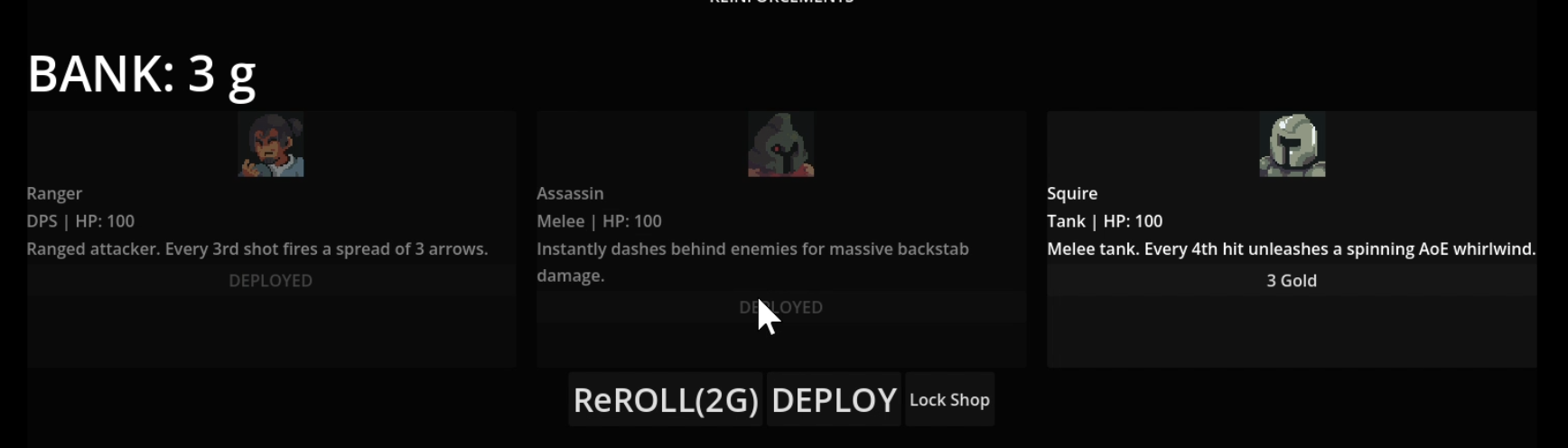
Recruit, reroll, deploy, or lock the shop. Each decision shapes the squad’s frontline, damage profile, champion synergies, and future merge options.
Boss encounters
Boss encounters test movement, positioning, and squad composition through individually designed attack patterns.
Systems and features
Inspired by Vampire Survivors and auto-chess, the game shifts the survivor formula from a lone fighter to commanding a growing squad of autonomous champions.
More than six champion designs bring distinct powers to the squad, while more than six mob types and three bosses introduce their own attack patterns.
Three matching champions merge into one stronger version — a familiar auto-chess rule that powers the squad up for increasingly dangerous waves.
Every run recombines map tiles and environment assets under layout rules, keeping each battlefield varied without sacrificing readable paths.
A behind-the-scenes dynamic difficulty system, inspired by the Resident Evil series, adjusts pressure as the run develops.
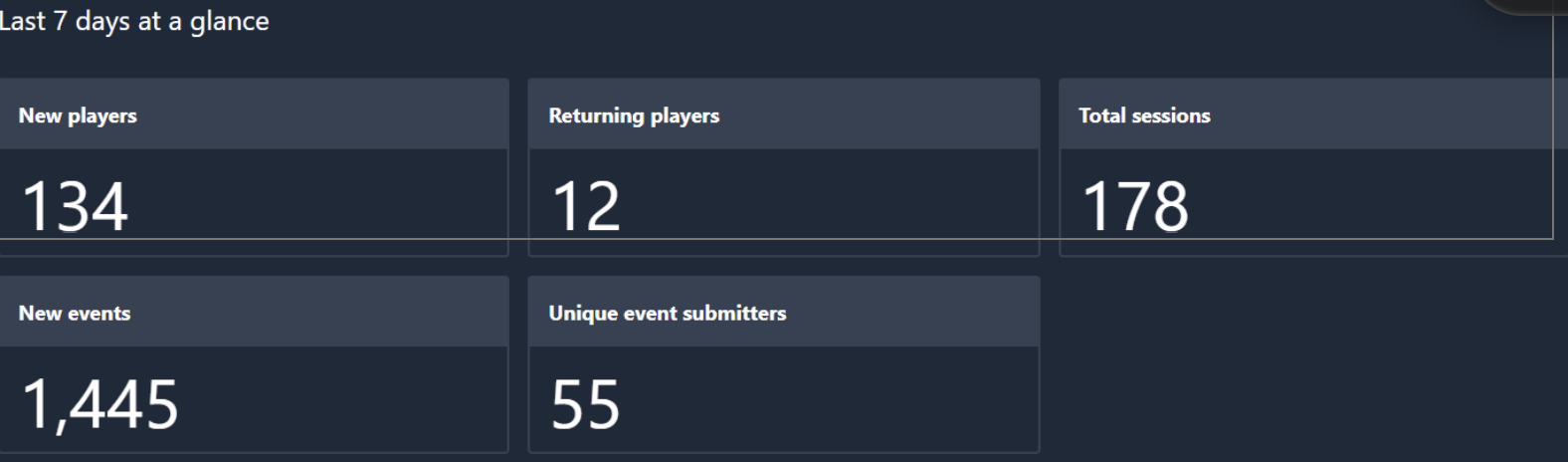
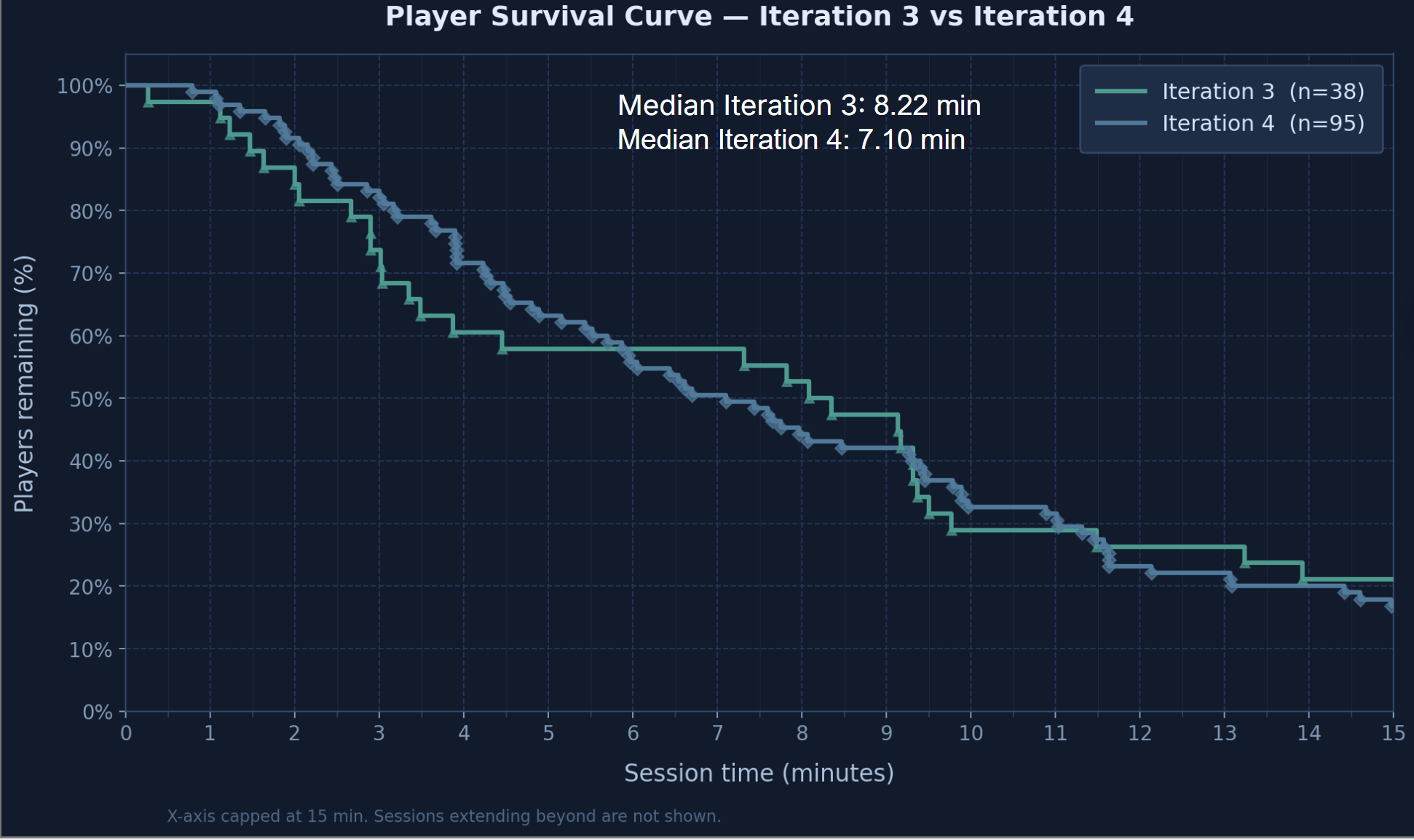
Backend analytics APIs capture survival time, progression, and other play metrics in real time to support evaluation and design iteration.
Telemetry and iteration
Integrated analytics APIs send real-time session, progression, and survival data to Talo. The records support academic reporting and make it possible to compare how balance changes affect player behavior across iterations.